By Solveiga Pakštaitė
What goes on for founders behind the shiny LinkedIn posts?
What does it really take to build a company that is trying to solve some of the world’s biggest problems and still look after yourself along the way?
In honour of International Women’s Day, we partnered with Global WIIN to bring together a group of female founders, changemakers and allies to explore exactly that. The conversation was framed by a simple but powerful question: how do you stay sane and keep going while trying to change the world?
We heard about the gut-wrenching challenges, the habits that keep them going and the support networks they lean on.
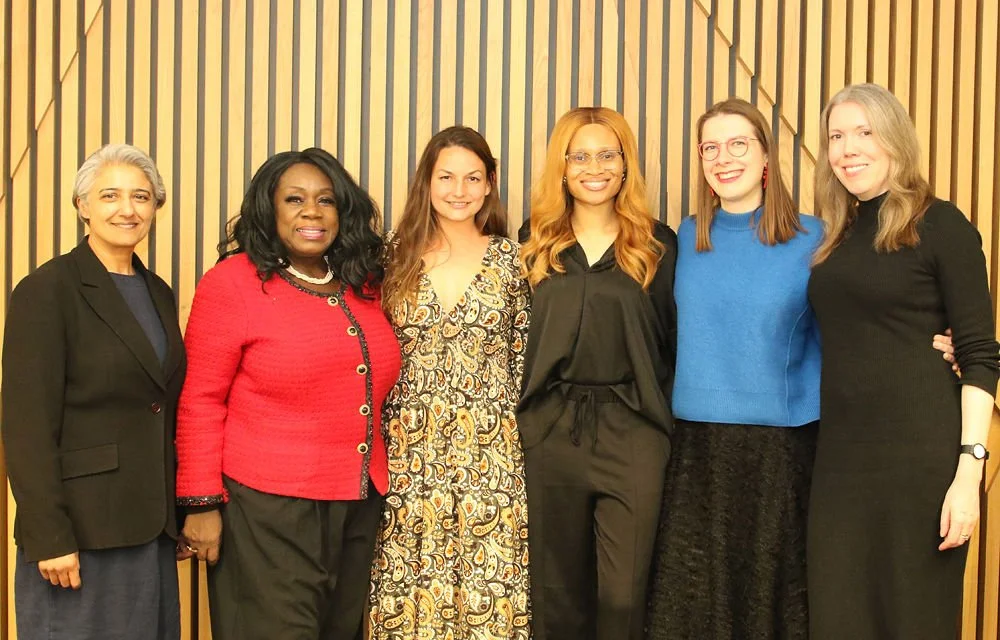
L-R: Gurnam Selvarajah (QSTEP), Dr Bola Olabisi (GlobalWIIN), Agnes Czako (Airex Technologies), Oluchukwu Okonkwo (Oluchukwu Group), Solveiga Pakštaitė (Mimica/FF2030); Kim Willis (Author)
Women have always been changemakers
Keynote speaker Kim Willis, author of No Fair Maidens, shared ancient stories of powerful women who used their abilities as a force for good. Kim reminded us to reflect on what makes women uniquely able to solve some of our planet’s biggest problems and how leaning into the community of sisterhood replenishes and strengthens our impact.
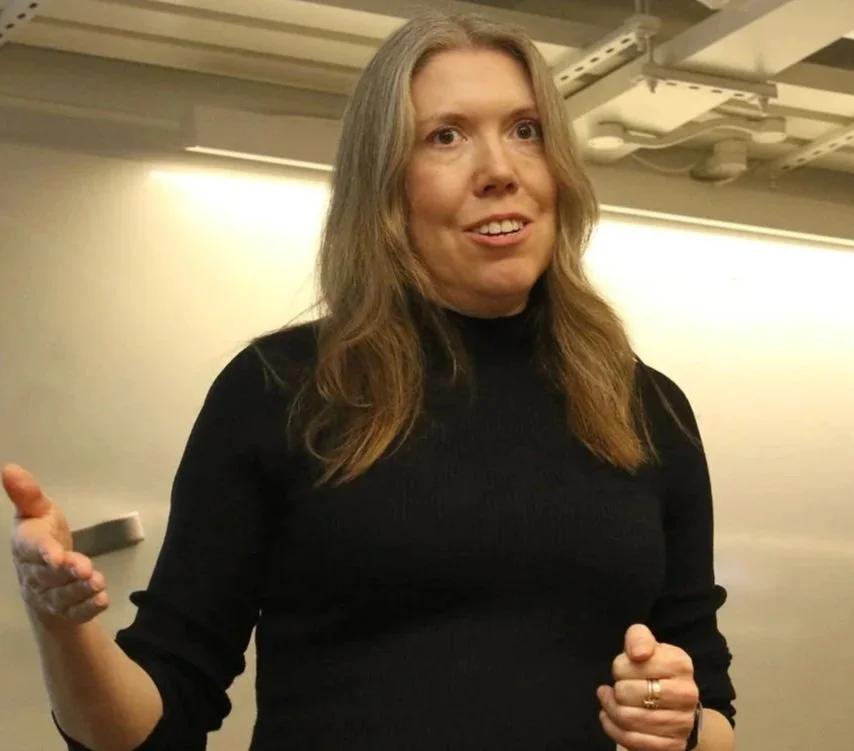
Kim delivering the keynote speech
An honest female impact founders panel
We then opened a panel discussion between three generous founders who shared their experiences of entrepreneurship:
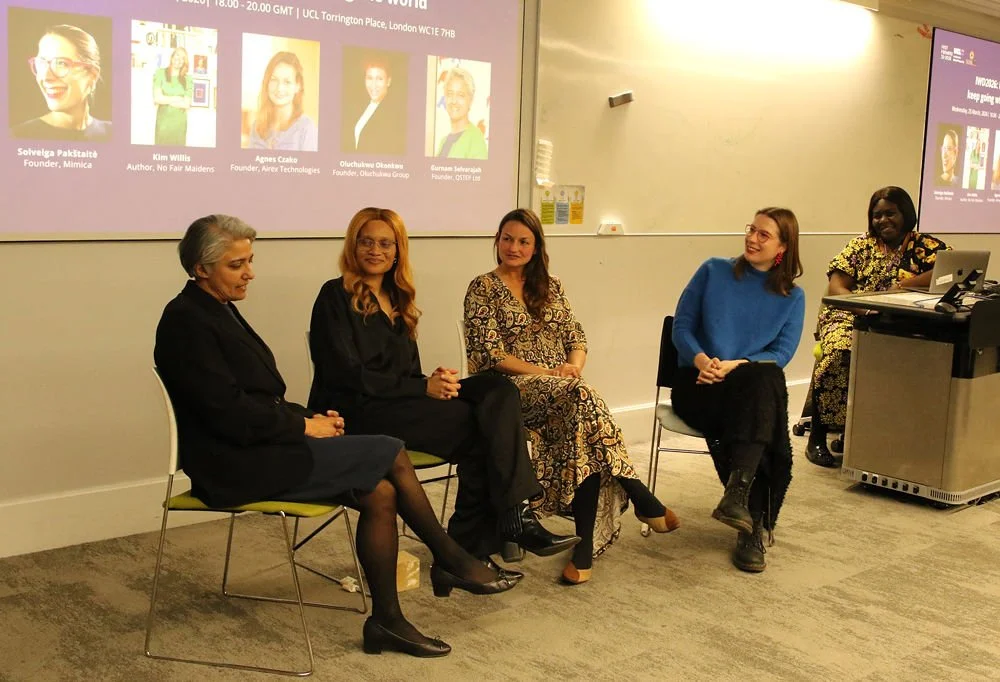
The inspiring panellists
Agnes Czako, Founder & CEO of AirEx
Oluchukwu Okonkwo, Founder of Oluchukwu Group
Gurnam Selvarajah, Director of ScaleUps Ventures and QStep
Moderated by Solveiga Pakštaitė, Founder and Chief Design Officer of Mimica
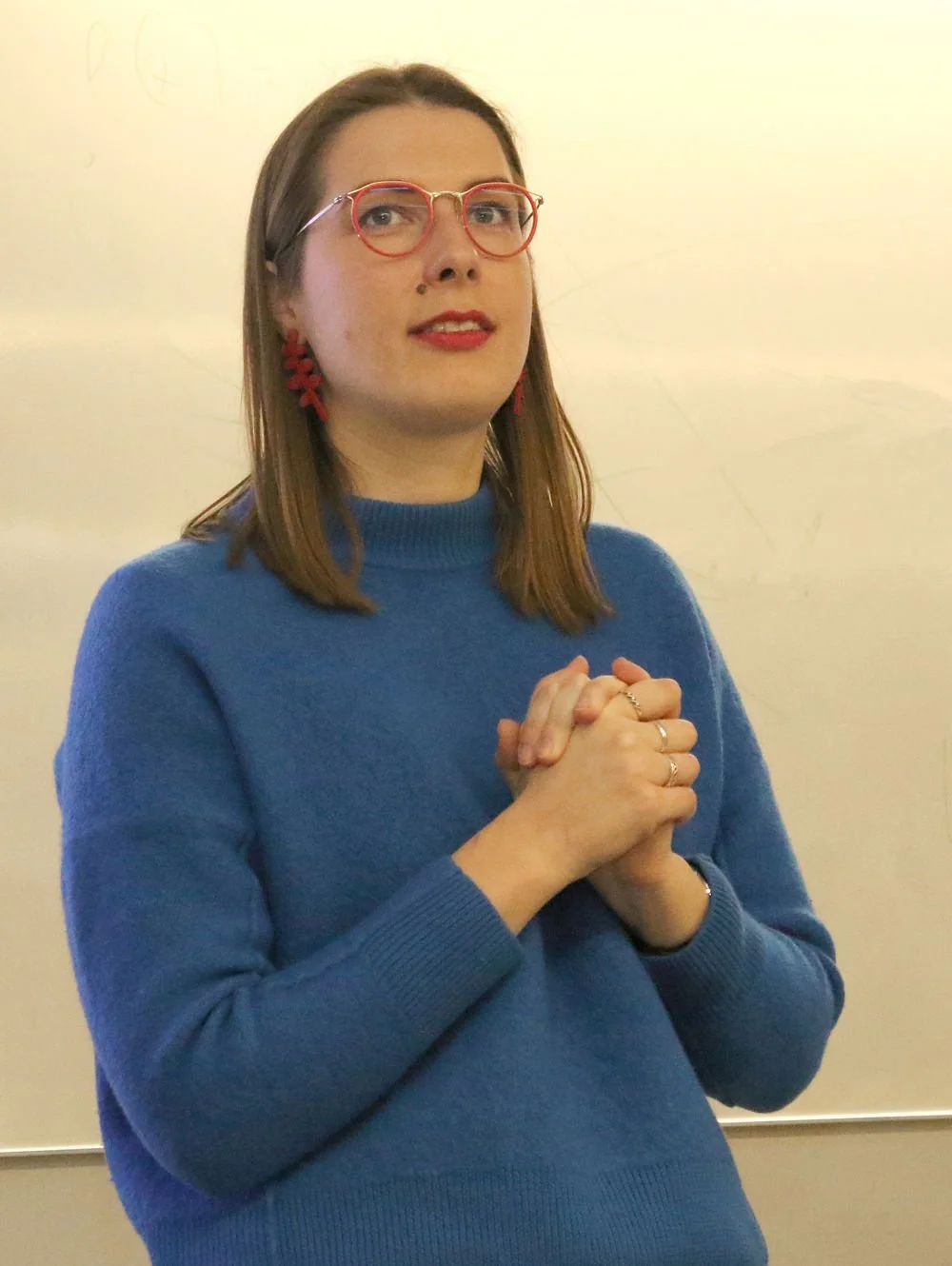
Solveiga in action
Here are the themes that emerged:
You are not carrying the whole world
When your work is tied to climate change, inequality or systemic challenges, it is easy to feel an overwhelming sense of responsibility. But one panellist offered a reframing that clearly resonated across the room. She described her work as one piece of a much larger jigsaw. Important, but not the whole picture.
She also drew a parallel with how she tackles ultra-marathon running: break it into manageable stages and keep moving forward.
You do not have to do everything
A second theme that came through strongly was the importance of letting go.
Several founders spoke about the tendency to take on too much, especially in the early stages. Over time, they had learned that leadership is not about doing everything yourself.
Delegation, collaboration and bringing others along on the journey were not just operational decisions, but survival strategies.
One comment captured this perfectly: “Just because you are capable of doing something does not mean you have to do it.”
Burnout is not a badge of honour
The conversation around burnout was refreshingly honest.
Rather than presenting resilience as constant endurance, one of the founders spoke about working in cycles. There are periods to push, but also times to slow down, step back or even stop entirely - “the dishes can wait!”.
Another shared her experience of coming close to burnout and the impact of taking a sabbatical. Stepping away allowed her to return with clarity and renewed energy, rather than continuing to push through diminishing returns.
It was a reminder that rest is not a reward for finishing the work. It is what enables the work to continue.
Community makes the difference
If there was one thread that the panel kept coming back to: the role of other people.
Whether it was peers, collaborators, mentors or simply trusted friends, no one was doing this alone. Community was not just a support system in difficult moments, but a way of sharing the emotional weight of the work itself.
There was also a strong sense that bringing others into your vision makes the journey more sustainable. Impact is rarely created in isolation.
Redefining success
Perhaps unsurprisingly, success did not have a single definition.
For some, it was about building something novel and impactful. For others, it was about doing meaningful work and continuing to learn. One founder chose not to define it at all, focusing instead on staying open and purposeful.
What united these perspectives was a move away from narrow, external markers of success towards something more personal, impact-driven and evolving.
Staying in it for the long term
The stories shared by the founder unearthed a shared mindset of long-term dedication.
They are all deeply committed to solving complex, urgent problems. But they are also learning, sometimes the hard way, that personal sustainability and not losing yourself in the process is key to delivering the impact they want to see.
Thank you to all our wonderful speakers for sharing so generously - discussing the gritty reality of leading on untrodden paths, so that others doing the same feel less alone.
If we want founders to keep doing the work that the world needs, we need to keep talking not just about how to start, but how to keep going.
This event was part of the Fast Forward 2030 event series. Join our next events here.
About the Author
Solveiga Pakštaitė is a Fast Forward 2030 board member and is an inventor and entrepreneur with an industrial design background. She invented Bump, a patented temperature-sensitive food spoilage indicator to radically reduce unnecessary food waste. Solveiga is the Chief Design Officer & Founder of Mimica and was named MIT Technology Review's Inventor of the Year. She also holds an Honorary Lectureship at UCL and consults on innovation projects for leading consumer and technology companies